How Nonwoven Fabrics Are Made
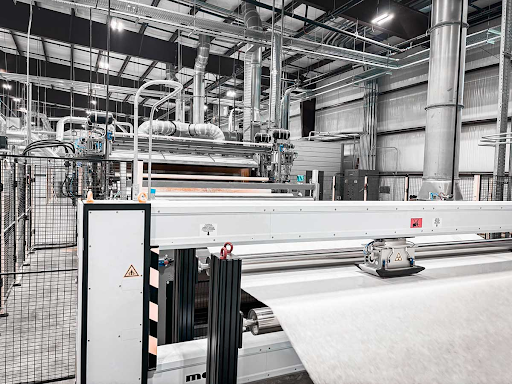 The performance of a nonwoven fabric starts with how it is manufactured. Different processes create different material properties.
1. Fiber Formation
Raw materials such as polyester, polypropylene, viscose, or cotton are processed into fibers or filaments.
2. Web Formation
Fibers are laid into a web using various methods:
- Carding (aligned fibers)
- Air-laid (random fiber distribution)
- Wet-laid (similar to papermaking)
3. Bonding Methods
The fiber web is bonded to create a stable fabric:
- Thermal Bonding
- Uses heat to fuse fibers
- Often used with synthetic fibers
- Creates strong, lightweight materials
- Mechanical Bonding
- Includes needle punching or hydroentangling
- Provides durability and texture
- Chemical Bonding
- Uses binders or resins
- Allows for enhanced strength or flexibility
Each method influences the final fabric’s strength, softness, porosity, and performance.
Types of Nonwoven Fabrics
Nonwoven fabrics come in a variety of types, each engineered for specific performance needs.
Spunbond Nonwovens
- Strong and durable
- Common in filtration, agriculture, and industrial uses
Meltblown Nonwovens
- Extremely fine fibers
- Ideal for filtration and barrier applications
Air-Laid Nonwovens
- High absorbency
- Used in hygiene and wipes
Carded Nonwovens
- Versatile and customizable
- Used across multiple industries
Bicomponent Nonwovens
- Combine two polymers in one fiber
- Enable advanced performance (e.g., strength + softness)
Each of these can be engineered further with coatings, finishes, or fiber blends.
Common Materials Used in Nonwoven Fabrics
The choice of fiber plays a major role in determining performance.
Polyester Nonwovens
- Strong and durable
- Naturally hydrophobic
- Ideal for filtration and industrial applications
Polypropylene Nonwovens
- Lightweight and cost-effective
- Common in disposable products and filtration
Viscose (Rayon) Nonwovens
- Soft and highly absorbent
- Used in wipes and hygiene products
Cotton Nonwovens
- Natural and breathable
- Used in medical and personal care applications
Blends of these materials are often used to achieve specific performance goals.
Key Properties of Nonwoven Fabrics
Nonwoven fabrics can be engineered to meet precise performance requirements.
Strength and Durability
- Designed to withstand mechanical stress and environmental conditions
Absorbency or Repellency
- Can be hydrophilic (absorbent) or hydrophobic (repellent)
Breathability and Porosity
- Critical for filtration and airflow applications
Softness and Comfort
- Important for medical and hygiene products
Chemical and Thermal Resistance
- Essential for industrial and filtration environments
What Are Nonwoven Fabrics Used For?
Nonwoven fabrics are used across a wide range of industries due to their versatility and performance.
- Air filtration media
- Liquid filtration systems
- HVAC and industrial filters
- Surgical gowns and masks
- Wound dressings
- Medical disposables
- Wipes and cleaning cloths
- Diapers and absorbent products
- Cosmetic and skincare applications
- Crop covers and weed barriers
- Soil stabilization fabrics
- Moisture control solutions
- Insulation and protective materials
- Automotive components
- Construction materials
Nonwoven vs Woven Fabrics: What’s the Difference?
Understanding how nonwoven fabrics compare to traditional textiles helps clarify their advantages.
| Feature |
Nonwoven Fabrics |
Woven Fabrics |
| Manufacturing |
Bonded fibers |
Interlaced yarns |
| Production Speed |
Fast |
Slower |
| Customization |
Highly customizable |
Limited |
| Cost Efficiency |
Often lower |
Often higher |
| Performance |
Engineered for application |
General-purpose |
Nonwoven fabrics are often chosen when performance, efficiency, and customization are more important than traditional textile structure.
Why Manufacturers Choose Nonwoven Fabrics
Nonwovens have become a preferred material across industries because they offer:
- Design flexibility for specific applications
- Consistent, repeatable performance
- Cost-effective manufacturing
- Lightweight yet durable construction
- Scalability for high-volume production
For product developers and engineers, this flexibility makes nonwovens a powerful material platform.
How WPT Nonwovens Supports Your Application
Selecting the right nonwoven fabric involves more than choosing a material—it requires understanding how fiber selection, bonding, and finishing impact performance.
WPT Nonwovens works with manufacturers to develop customized solutions, including:
- Engineered fiber blends (polyester, viscose, cotton, and more)
- Specialized finishes and coatings
- Bicomponent and advanced nonwoven structures
- Rapid prototyping and sampling
- Domestic U.S. manufacturing for reliable supply
Whether your application requires filtration efficiency, absorbency, strength, or a combination of properties, WPT can help develop a solution tailored to your needs.