Overview Summary
- Hydrophobic nonwoven fabrics repel water, while hydrophilic nonwovens absorb and retain moisture
- Material performance is influenced by fiber selection, bonding methods, and surface treatments
- Hydrophobic nonwovens are commonly used in filtration, PPE, and barrier applications
- Hydrophilic nonwovens are ideal for wipes, hygiene products, and medical absorbent applications
- Many advanced applications use engineered materials that combine both properties
- Choosing the right nonwoven impacts product performance, efficiency, and cost
What Does Hydrophobic vs Hydrophilic Mean?
At a fundamental level, the difference between hydrophobic and hydrophilic materials comes down to how they interact with water.
- Hydrophobic materials repel water. Liquids bead up and remain on the surface rather than being absorbed.
- Hydrophilic materials attract and absorb water, allowing moisture to spread and move through the material.
In nonwoven fabrics, these properties are critical because they directly influence how a material performs in real-world applications, from filtration systems to medical products and hygiene solutions.
How Nonwoven Fabrics Are Engineered for Water Interaction
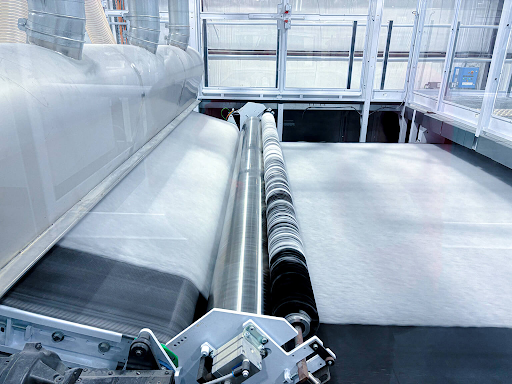 Unlike woven textiles, nonwoven fabrics can be precisely engineered to achieve specific performance characteristics, including hydrophobicity or hydrophilicity.
This is accomplished through a combination of:
Fiber Selection
- Hydrophobic fibers: Polyester, polypropylene
- Hydrophilic fibers: Viscose (rayon), cotton
Surface Treatments & Finishes
- Chemical treatments can make a hydrophobic fiber behave hydrophilically
- Coatings can enhance liquid resistance or improve absorption
Bicomponent Fiber Technology
- Combines two different polymers in one fiber
- Enables dual-performance materials (e.g., absorbent core + liquid-resistant outer layer)
This level of control is what makes nonwovens highly adaptable across industries.
Hydrophobic Nonwoven Fabrics: Characteristics & Applications
Hydrophobic nonwoven fabrics are designed to resist water penetration while maintaining breathability and structural integrity.
Key Characteristics
- Repels water and aqueous solutions
- Maintains strength when exposed to moisture
- Often provides barrier protection
- Can support filtration efficiency without absorbing liquids
Common Applications
- Air and liquid filtration media
- Medical gowns, masks, and PPE
- Industrial barrier materials
- Oil-water separation systems
Hydrophobic materials are essential in environments where controlling moisture exposure is critical to performance and safety.
Hydrophilic Nonwoven Fabrics: Characteristics & Applications
Hydrophilic nonwoven fabrics are engineered to absorb, wick, and retain moisture, making them ideal for applications where liquid management is required.
Key Characteristics
- Rapid liquid absorption
- Strong wicking and distribution capabilities
- Soft, skin-friendly texture
- Can retain or disperse fluids as needed
Common Applications
- Personal care wipes and hygiene products
- Medical dressings and absorbent pads
- Cleaning and industrial wipes
- Agricultural moisture control fabrics
Hydrophilic materials are widely used where comfort, absorbency, and fluid handling are priorities.
Hydrophobic vs Hydrophilic Nonwovens: Side-by-Side Comparison
| Property |
Hydrophobic Nonwovens |
Hydrophilic Nonwovens |
| Water Interaction |
Repels water |
Absorbs water |
| Common Fibers |
Polyester, Polypropylene |
Viscose, Cotton |
| Surface Behavior |
Liquid beads on surface |
Liquid spreads and absorbs |
| Primary Function |
Barrier and protection |
Absorption and moisture management |
| Typical Applications |
Filtration, PPE, industrial barriers |
Wipes, hygiene, medical absorbents |
When to Choose Hydrophobic vs Hydrophilic Nonwovens
Selecting the right material depends on how your product needs to interact with moisture.
Choose Hydrophobic Nonwovens When:
- You need liquid resistance or barrier protection
- Moisture exposure could compromise performance
- Filtration efficiency must be maintained without saturation
Choose Hydrophilic Nonwovens When:
- Absorption or wicking is required
- The material needs to manage or distribute fluids
- Comfort and softness are important (especially for skin contact)
Consider Hybrid or Engineered Solutions When:
- You need both absorption and protection
- Multi-layer performance is required
- Product performance depends on controlled fluid flow
Can Nonwovens Be Both Hydrophobic and Hydrophilic?
Yes, many advanced nonwoven materials are engineered to deliver both properties within a single product.
How This Is Achieved:
- Layered material construction (e.g., outer hydrophobic layer + inner hydrophilic core)
- Surface-treated fibers that alter fluid interaction
- Bicomponent fibers with dual-performance characteristics
These engineered solutions are especially valuable in applications like:
How WPT Nonwovens Helps You Select the Right Material
Choosing between hydrophobic and hydrophilic nonwoven fabrics is rarely a one-size-fits-all decision. It often requires balancing performance, cost, and application-specific requirements.
WPT Nonwovens works with manufacturers to develop materials that meet exact performance criteria, including:
Whether your application requires liquid resistance, absorbency, or a combination of both, WPT can help develop a tailored solution.
Frequently Asked Questions
What is the difference between hydrophobic and hydrophilic materials?
Hydrophobic materials repel water, while hydrophilic materials attract and absorb it.
Is polyester hydrophobic?
Yes, polyester is naturally hydrophobic, though it can be treated to exhibit hydrophilic properties.
Can a nonwoven fabric be both hydrophobic and hydrophilic?
Yes, through layering, treatments, or bicomponent fibers, nonwovens can be engineered to provide both properties.
What are hydrophilic nonwovens used for?
They are commonly used in wipes, hygiene products, medical dressings, and absorbent materials.
What industries use hydrophobic nonwovens?
Hydrophobic nonwovens are widely used in filtration, medical PPE, industrial applications, and barrier materials.
Ready to Discuss the Right Nonwoven for Your Application?
Selecting the right material is critical to product performance, efficiency, and long-term success. If you’re evaluating hydrophobic vs hydrophilic nonwoven options, the best solution often comes from understanding your specific application requirements.
Contact WPT Nonwovens today to discuss your project, request samples, and explore custom-engineered nonwoven solutions designed to perform.