Why Nonwoven Fabrics Are Ideal for Filtration Applications
Nonwoven materials offer several advantages over traditional filtration materials such as woven fabrics or paper-based media.
Engineered Filtration Efficiency
Fiber diameter, density, and layering can be controlled to capture specific particle sizes.
Low Pressure Drop
Optimized fiber structures allow air or liquid to pass through with less resistance, improving system efficiency.
Customizable Performance
Materials can be developed for:
- Particle size capture
- Airflow requirements
- Chemical resistance
- Moisture exposure
Cost-Effective and Scalable
Nonwoven manufacturing processes support high-volume production with consistent quality.
Types of Nonwoven Filtration Media
Different nonwoven constructions are used depending on the filtration application.
Spunbond Filtration Media
- Strong and durable
- Provides structural support
- Often used as a backing layer
Meltblown Filtration Media
- Ultra-fine fibers for high-efficiency filtration
- Ideal for capturing small particles
- Common in air filtration and medical applications
Needle-Punched Nonwovens
- High durability and depth filtration
- Suitable for industrial and liquid filtration
Air-Laid and Carded Nonwovens
- Flexible and customizable
- Used in both air and liquid filtration systems
Multi-Layer and Composite Media
- Combines different fiber types and structures
- Balances efficiency, airflow, and durability
Applications for Nonwoven Filtration Media
Nonwoven filtration media is used across a wide range of industries and environments.
Air Filtration Applications
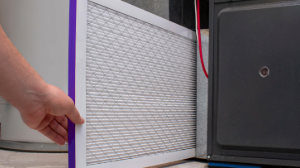
- HVAC systems
- Industrial air filtration
- Exhaust and ventilation systems
- Cleanroom and controlled environments
Nonwoven air filtration media improves indoor air quality while reducing energy consumption through lower airflow resistance.
Liquid Filtration Applications
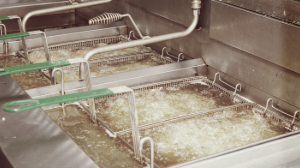
- Food and beverage processing
- Water filtration systems
- Chemical and industrial fluids
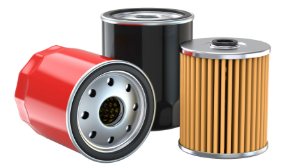
- Oil and fuel filtration
Nonwoven media can be engineered to handle different viscosities, particle sizes, and chemical environments.
Automotive and Transportation
- Engine air filters
- Cabin air filters
- Fuel and oil filtration
Specialty Filtration Applications
- Pharmaceutical and medical filtration
- Cleanroom environments
- Antimicrobial filtration systems
Nonwoven Air Filtration Media and System Performance
Air filtration performance is not just about capturing particles, it also impacts overall system efficiency.
Nonwoven air filtration media provides:
- Improved indoor air quality (IAQ)
- Reduced energy consumption in HVAC systems
- Consistent airflow across the filter surface
- Enhanced particle capture without restricting performance
Synthetic nonwoven materials, in particular, are highly effective at capturing fine particulate matter while maintaining low resistance.
Key Performance Factors in Filtration Media
Choosing the right nonwoven filtration media depends on several critical performance factors.
- Filtration Efficiency – Ability to capture particles of a specific size
- Pressure Drop – Resistance to airflow or liquid flow, lower pressure drop improves system efficiency
- Dust Holding Capacity – How much particulate the media can retain before replacement
- Fiber Composition – Determines durability, chemical resistance, and moisture interaction
- Environmental Conditions – Temperature, humidity, and exposure to chemicals or oils
Custom Nonwoven Filtration Media Solutions
No two filtration applications are exactly the same. That’s why custom-engineered nonwoven media is often required to achieve optimal performance.
WPT Nonwovens develops tailored filtration solutions using:
- Polyester, polypropylene, viscose, and blended fibers
- Gradient density structures for improved capture
- Multi-layer composite designs
- Application-specific finishes and treatments
Nonwoven Treatments and Enhancements
To further optimize filtration performance, nonwoven media can be treated with specialized finishes.
- Anti-microbial / anti-bacterial
- Anti-static
- Hydrophobic or hydrophilic treatments
- Flame retardant
- Biodegradable options
- Custom colors and coatings
These enhancements allow materials to meet specific regulatory, environmental, and performance requirements.
Why Choose WPT Nonwovens for Filtration Media
WPT Nonwovens is a dependable and trusted U.S. manufacturer of nonwoven filtration media, providing reliable and high-performance materials for demanding applications.
Domestic Manufacturing Advantage
- Consistent quality and supply
- Faster lead times
- Responsive production capabilities
Engineering and Application Expertise
- Material selection guidance
- Custom design support
- Application-specific solutions
Flexible Production and Converting
- Inline slitting and winding
- Custom roll formats
- Scalable production volumes
WPT works closely with customers to develop filtration media that meets both performance and production requirements.
 Nonwoven filtration media is a specialized material made from bonded fibers designed to capture contaminants from air or liquid streams. Unlike woven materials, nonwoven fabrics can be engineered with precise fiber structures and pore sizes to optimize filtration performance.